
Physical changes like reduced hand strength, arthritis, diminished grip control, and decreased visual acuity make many everyday packaging designs particularly difficult for older adults to open.
High-Difficulty Packaging Types
Clamshell Packaging: Rigid, heat-sealed clear plastic around electronics, tools, or batteries that requires high grip strength and sharp tools to cut.
Plastic Film & Sacrificial Wraps: Thin, tightly stretched plastic over meat trays, cucumber skins, or multi-packs of drinks that lack a clear tear tab.
Child-Resistant & Push-Down-and-Turn Caps: Medicine bottles and household cleaners requiring simultaneous downward force and rotational torque.
Peel-Back Seals & Pull Tabs: Milk jugs, yogurt cups, juice cartons, and canned goods with tiny, slippery foil or plastic tabs that require high pinch strength.
Vacuum-Sealed Glass Jars: Pickles, pasta sauce, and jams where strong factory vacuum pressure binds the metal lid to the glass threads.
Thick Ziplock & Resealable Pouches: Frozen food, coffee, or detergent pods with stiff, high-friction tracks and narrow top flaps that offer minimal grip.
Cardboard Boxes with Heavy Adhesive: Cereal boxes, shipping packages, or frozen dinner boxes glued shut with industrial adhesive that tear unpredictably.
Blister Packs: Individual pill foil-backed plastic bubbles that require concentrated thumb pressure to push medication through the backing.
Packaging Feature
Physical Barrier for Older Adults
Small Surface Area
Requires fine motor skill and pinch strength (which declines faster than palm grip).
Low Friction / Smooth Plastic
Slippery surfaces require significantly higher force to maintain a grip.
Low Contrast Instructions
Tiny, light-colored text or arrows detailing where to open or tear are hard to read.
High Shear Strength Needed
Requires sharp twisting, ripping, or bending movements that stress arthritic joints.
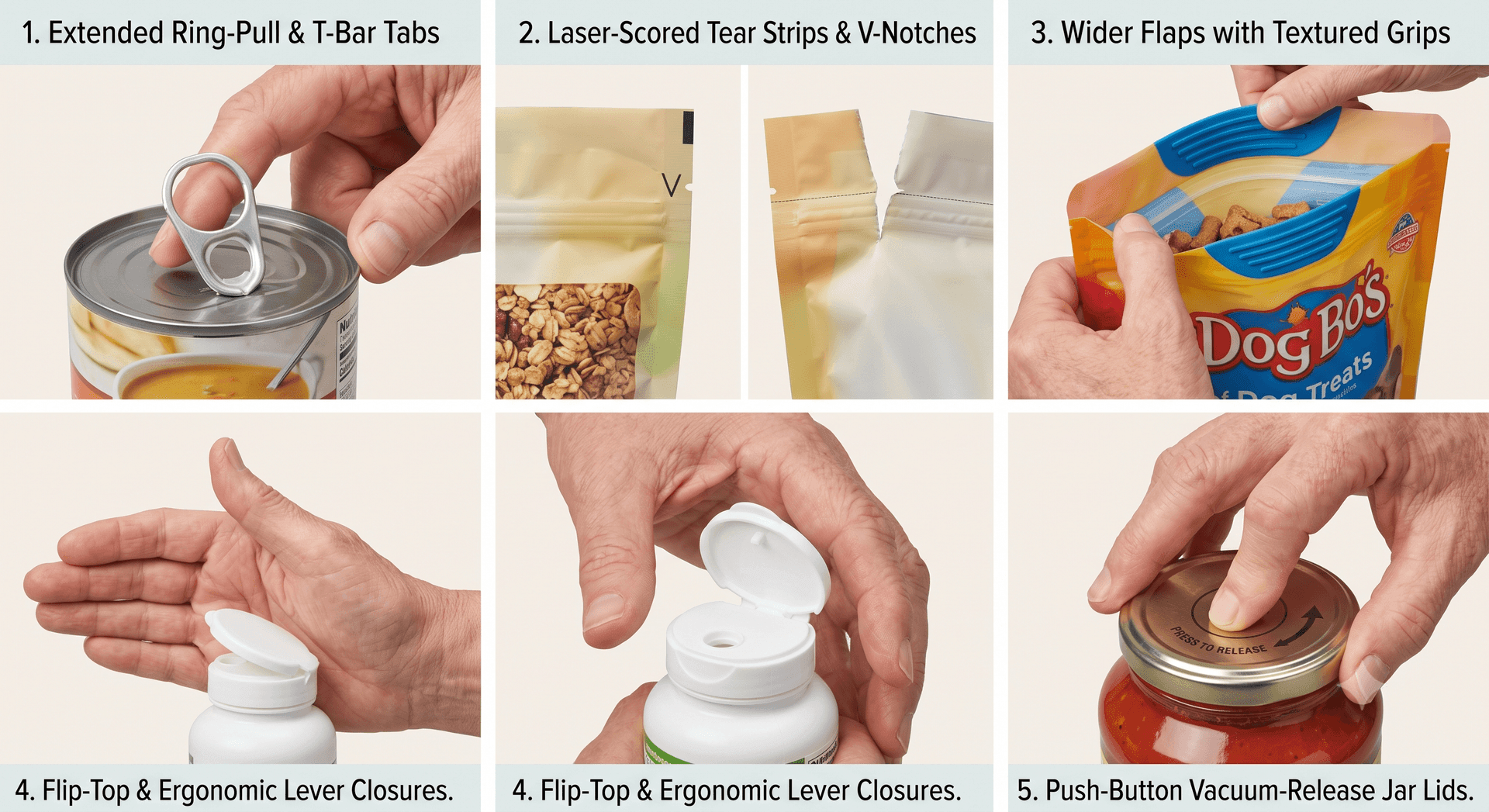
Accessible packaging designs help older adults and individuals with limited hand strength or arthritis open food and everyday products independently:
1. Extended Ring-Pull & T-Bar Tabs
Features: Larger, loop-shaped pull tabs or extended T-bars on cans, foil lids, and pouch seals.
Why it helps: Allows a person to slip a whole finger through the loop or hold a wide surface, using arm strength rather than fine pinch strength.
2. Laser-Scored Tear Strips & V-Notches
Features: Pre-cut side notches paired with laser-scored lines across flexible pouches and snack bags.
Why it helps: Guides the tear smoothly straight across without requiring sharp tools or high gripping force.
3. Wider Flaps with Textured Grips
Features: Pouches and resealable bags designed with extended top lips, ridged rubberized edges, or offset flaps.
Why it helps: Gives fingers maximum surface friction, making it significantly easier to pull opposing sides apart.
4. Flip-Top & Ergonomic Lever Closures
Features: Large flip-cap lids or lever-based closures instead of traditional screw caps.
Why it helps: Eliminates twisting motion (torque), allowing users to open bottles or containers with the palm or flat of a hand.
5. Push-Button Vacuum-Release Jar Lids
Features: Lids designed with a central release button or a dual-lid system.
Why it helps: Breaks the internal vacuum seal before turning, so the lid unscrews effortlessly.
